The Skin and Hair Growth Ingredient Everyone's Talking About
5/8/20244 min read
GHK-Cu Copper Peptide
Table of Contents
• What Is GHK-Cu?
• How GHK-Cu Works
• What the Research Actually Shows
• Reported Skin Benefits
• Reported Hair Benefits
• How GHK-Cu Is Used in Practice
• Side Effects, Safety, and Sourcing
• Frequently Asked Questions
• The Bottom Line
What is GHK-Cu?
GHK-Cu is a tiny peptide — just three amino acids long: glycine, histidine, and lysine — that naturally binds to a copper ion. The combination forms a stable copper-peptide complex that the body recognizes and uses. GHK itself was first identified in human plasma in the 1970s and has been studied for nearly fifty years.
GHK-Cu is essentially a signal molecule for skin and tissue repair, with copper acting as a cofactor that activates much of its effect. Levels of natural GHK in the body decline with age — roughly cut in half by your sixties — and that decline tracks closely with the slowing of skin regeneration. This is part of what made GHK-Cu interesting to dermatologists in the first place.
How GHK-Cu Works
GHK-Cu acts on multiple pathways at once, which is why it's been studied for such a wide range of effects. Three mechanisms are the most consistent across the published literature.
Stimulating collagen and elastin production
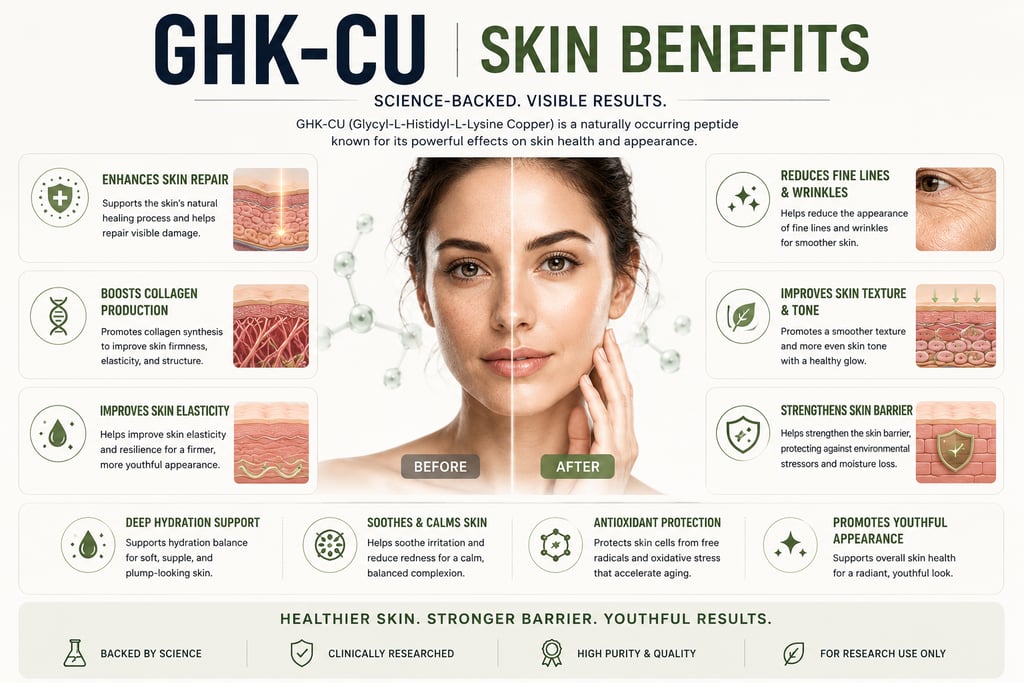
GHK-Cu signals fibroblasts — the cells that produce skin's structural proteins — to make more collagen, elastin, and glycosaminoglycans. These are the building blocks responsible for skin firmness, elasticity, and hydration. Studies in human skin samples and dermal fibroblast cultures have shown measurable increases in collagen production after GHK-Cu exposure.
Supporting wound healing and tissue regeneration
Some of the strongest GHK-Cu evidence comes from wound healing research. Topical GHK-Cu has been shown to accelerate healing in clinical studies of leg ulcers and post-procedure skin. The peptide appears to attract repair cells to a wound site, modulate inflammation, and support new tissue growth.
Acting as an antioxidant
GHK-Cu helps neutralize the reactive oxygen species that damage skin cells over time. This antioxidant action — combined with copper's role in the body's natural defense enzymes — is part of why GHK-Cu shows up in anti-aging research as something more than a single-purpose ingredient.
GHK-Cu has unusually strong research foundations for a wellness peptide. Decades of work has documented its effects in cell cultures, animal studies, and a meaningful number of human clinical trials — primarily in dermatology and wound care.
Most of the strongest evidence is for topical use, particularly for skin firmness, fine line reduction, and wound healing. Smaller studies have shown improvements in skin density, elasticity, and visible signs of photoaging after consistent topical application. The peptide has also performed well in side-by-side comparisons against other established cosmetic actives.
Research on injectable GHK-Cu in humans is much thinner. Most injection-based use is extrapolated from animal studies and from small case series rather than full clinical trials. Hair growth research is similarly mixed — promising preclinical data and some encouraging human results, but no large definitive trials yet.
What this means in practice: topical GHK-Cu sits closer to the science-supported end of cosmetic ingredients, while injectable or systemic protocols sit closer to the experimental end. Match your expectations to the evidence base for the form you're considering.
What the Research Actually Shows
Reduced fine lines and improved firmness
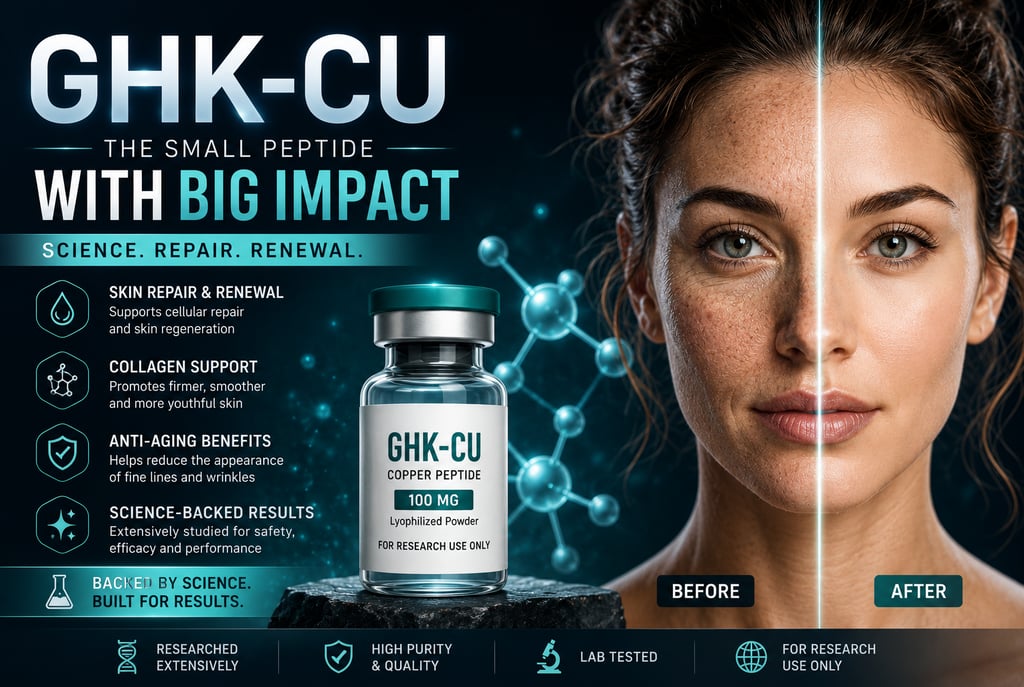
The most reproduced benefit is improvement in fine lines and skin firmness. In published trials, participants applying topical GHK-Cu for 12 weeks showed measurable reductions in wrinkle depth, increases in skin thickness, and improvements in elasticity. Real-world users typically describe the effect as gradual but visible — not the dramatic before-and-after of a peel or laser, but a steady improvement in texture over months.
Faster healing and reduced post-procedure downtime
Dermatologists have used GHK-Cu adjunctively after procedures like microneedling, chemical peels, and laser treatments for years. The supporting research is consistent: copper peptides applied during the recovery window shorten healing time and reduce the risk of post-procedure pigmentation issues.
Better skin hydration and barrier function
Beyond visible aging, GHK-Cu seems to support the skin barrier — the lipid layer that holds moisture in and irritants out. Users with sensitive or compromised skin often report reduced redness and improved tolerance to other actives when GHK-Cu is part of a routine. This barrier-supporting role is one reason dermatologists sometimes recommend GHK-Cu serums during periods of active retinoid use, when the barrier is already under stress.
Reported Skin Benefits
Reported Hair Benefits
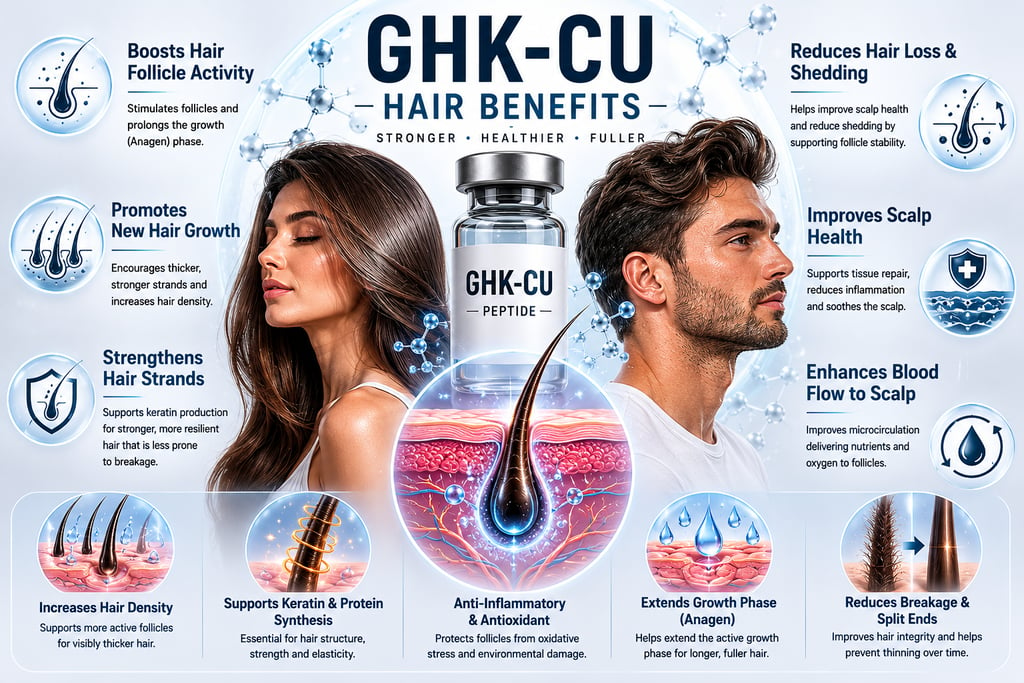
GHK-Cu's role in hair has emerged more recently than its skin work, but the research base is growing. The peptide appears to support the cells around the hair follicle and may extend the active growth phase of the hair cycle.
Potential effects on follicle health
In animal studies and a small number of human trials, GHK-Cu has been associated with thicker hair shafts, improved follicle size, and increases in active-phase follicles. Topical formulations are more commonly studied than injections for hair purposes.
Combination protocols
GHK-Cu is often combined with other established hair-growth ingredients like minoxidil or microneedling. Research on these combinations is limited but encouraging — and the rationale (different mechanisms targeting the same goal) is reasonable. Trichology specialists and dermatologists are best positioned to design a sensible combination protocol.
What GHK-Cu is unlikely to do, on its own, is reverse advanced androgenic alopecia. The peptide supports follicle health, but it does not block the hormonal driver of male-pattern or female-pattern hair loss. For thinning that's clearly hormonally driven, GHK-Cu is an adjunct rather than a primary treatment, and combining it with finasteride, minoxidil, or other targeted therapies is what produces the most consistent results in clinical practice.